
Meet the Magnet Forensics’ Training Team: Luke Smith
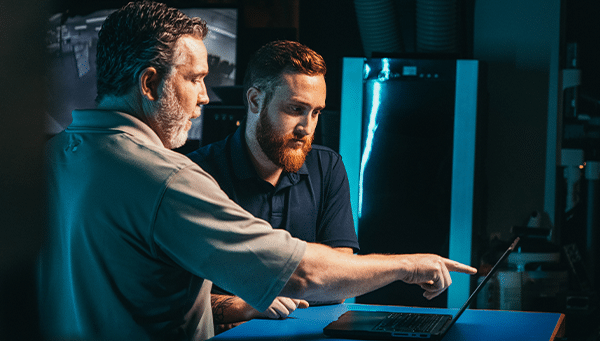
Introducing our newest member of the Training Team, Luke Smith. Learn more about Luke’s varied and interesting background and what he’s hoping to bring to his role at Magnet Forensics.
Introducing our newest member of the Training Team, Cody Flowers. Learn more about Cody’s varied and interesting background and what he’s hoping to bring to his role at Magnet Forensics.
AirTag, Apple’s foray into the Bluetooth tracker market, has major implications for public safety and digital evidence. Apple’s worldwide device network means that AirTag will make it extremely easy to track objects, but these tools can be used by bad actors as well. A criminal can now easily slip an AirTag into an unsuspecting victim’s bag, car, or other personal item to track their every move.
Magnet Forensics is a proud partner and supporter of the Child Rescue Coalition (CRC). The CRC is “a nonprofit organization that rescues children from sexual abuse by building technology for law enforcement, free of charge, to track, arrest, and prosecute child predators.”
Chances are if you have EDR (Endpoint Detection and Response) tools, your cybersecurity posture is mature enough that you also have DFIR (Digital Forensics and Incident Response) tooling as well. But you may be wondering: how they overlap, if at all. Do EDR tools and DFIR tools do the same thing, or do they complement each other?
The need to automate enterprise DFIR workflows is greater than ever. Private sector and enterprise organizations are facing an onslaught of cyberattacks that shows no sign of stopping. According to a study performed by Deep Instinct the use of malware increased by 358% through 2020, and ransomware usage increased by 435% compared to 2019.
If your DVR is not supported through DVR Examiner yet, you will be prompted to create a DVR Profiler report. These reports help us identify new DVRs that we haven’t encountered yet and are the first and most important step in getting your DVR supported. Without a DVR Profiler report, DME Forensics will have a much more difficult and time-consuming job of implementing your DVR.
DVR Examiner allows you to recover video and metadata from CCTV and surveillance DVRs including those that are password protected or damaged. Let’s walk through the best practices to get started with DVR Examiner, including some video clips that will help you get the most out of DVR Examiner for your investigations.
So, you’ve just been handed a hard drive from your boss who gives instructions to find all the vital information on a storage device. You are immediately excited for your first solo assignment, until you look down at the hard drive and think: “Now what do I do?”
A filesystem is a term that Magnet Forensics uses to refer to a specific family of DVRs. Families are often made up of several different lineages all combined, right? We see DVRs the same way. We deal with the internal computer components, namely mainboards and chipsets, that come inside the DVRs. Many people are surprised … Continued