
The new era of vehicle forensics: Why agencies need a modern approach
Key takeaways
- Vehicle infotainment systems hold GPS history, device connections, and system activity that can place suspects, confirm timelines, and corroborate accounts in a case.
- Until recently, accessing vehicle data required a manual and potentially destructive process that most agencies couldn’t afford to make routine.
- Today’s infotainment systems leverage the same kinds of data encryption that protect modern smartphones.
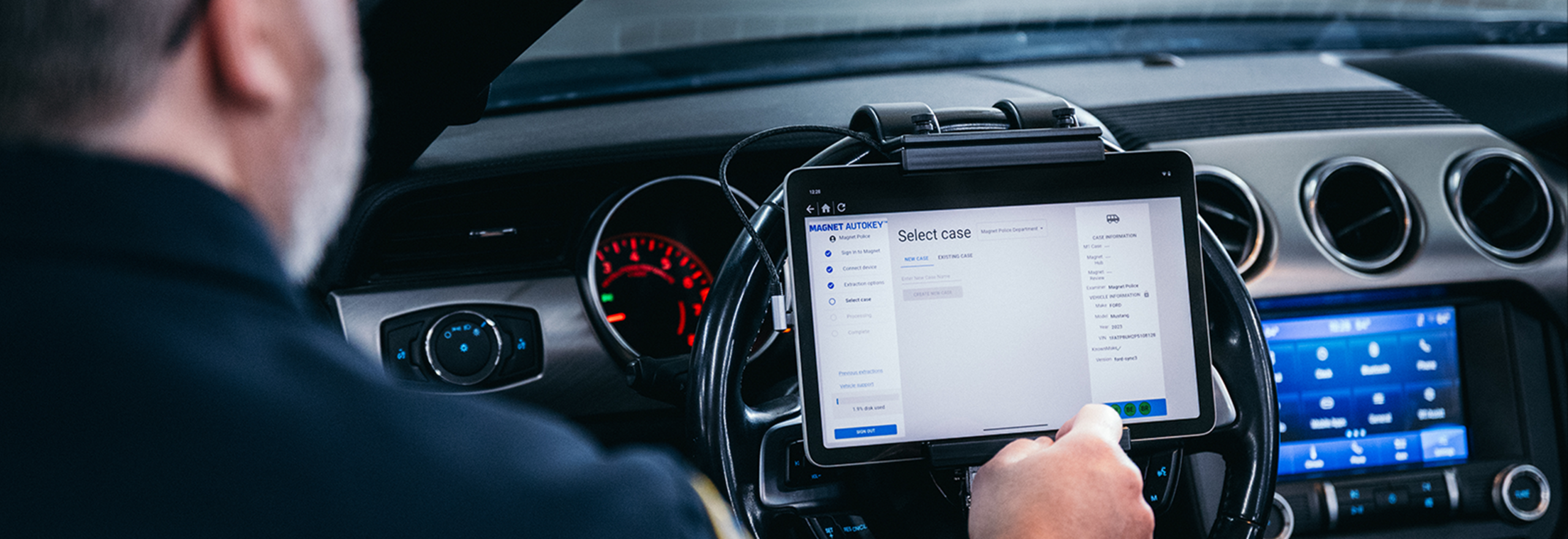
- Magnet Autokey connects directly to a vehicle’s USB port and delivers infotainment evidence in minutes, integrated with the same tools examiners already use for mobile and computer forensics.
Vehicle data has quietly become one of the most valuable evidence sources available to investigators. Modern infotainment systems record where a vehicle traveled, which devices connected to it, and what the system logged while the vehicle was in use — data that can help reconstruct timelines, confirm involvement, and corroborate accounts from suspects and witnesses.
Just as smartphones became indispensable to digital investigations over the past decade, vehicles are now capturing a rapidly growing volume of data that can augment what investigators recover from phones and other sources, or stand in for it when a phone isn’t available or accessible.
The challenge, until recently, was that getting to that data required techniques so invasive, time-consuming, and technically demanding that most agencies simply couldn’t make it a routine part of casework — and, increasingly, the data is protected by encryption that puts it further out of reach.
That’s changing. And for labs and investigators who haven’t yet incorporated vehicle evidence into their workflow, now is the time to take a closer look.
What evidence is stored in vehicle infotainment systems?
Infotainment systems in today’s vehicles hold three key categories of evidence:
- Location and movement data: GPS history, historical coordinates, and trip logs that place the vehicle at specific locations and times.
- Device and contact associations: paired-phone records, contact lists, call logs, and message fragments that link individuals to the vehicle.
- System events and interactions: actions taken in and around the vehicle at key moments — door events, media activity, and more.
When layered with mobile data, call detail records, license plate reader hits, and other digital sources, vehicle evidence becomes a powerful corroborating layer that can fill in gaps and strengthen the overall picture of a case. And as vehicles have grown more connected, the data they hold has grown richer and more complex — making it increasingly difficult for legacy acquisition methods to keep pace.
Why legacy vehicle forensic methods alone aren’t enough
Vehicle technology is evolving along the same path mobile devices already traveled — as infotainment systems grow more advanced, the value of the data they hold keeps climbing, and so do the barriers to acquiring it through legacy methods.
Legacy vehicle forensics is built on physically removing the infotainment unit from the dashboard to extract data, requiring specialized skills and years of hands-on experience. The process can consume days of skilled examiner time and is risky — and where that risk is hard to justify, agencies often won’t attempt it at all. That is often the case with a vehicle belonging to a victim or witness, where damaging or losing the unit becomes the agency’s liability, often running several thousand dollars to replace before labor costs are added.
There are instances where intrusive vehicle extractions are going to be the only option available to a lab, and the case warrants the likely destruction of the vehicle. But there are a number of investigations that would benefit from the inclusion of vehicle evidence from victims, witnesses, or suspects that are ultimately cleared.
The reality is that vehicle forensics has been limited to professionals with highly specialized skills. Most agencies don’t have anyone with chip-off skills on staff. And even when extractions succeed, encryption can leave examiners holding data they can’t actually access. When extractions do yield usable evidence, it doesn’t automatically connect to the rest of the case — it requires additional effort to integrate. The cumulative effect: evidence that belongs in investigations isn’t making it into the record and timelines are missing a critical data layer.
How Magnet Autokey simplifies vehicle evidence acquisition
Instead of requiring disassembly or specialist expertise, Magnet Autokey connects directly to a vehicle via its USB port and extracts infotainment evidence in minutes — without invasive techniques that put the vehicle at risk. More examiners can perform an acquisition, not just the few specialists most labs rely on today.
What makes this particularly meaningful for labs is where the evidence goes once it’s acquired. Autokey is fully integrated with Magnet One, meaning vehicle data automatically flows into the same environment where examiners are already working mobile, computer, and cloud evidence. Investigators can begin reviewing vehicle data in near real time through Magnet Review, alongside everything else in the case.
That integration changes what’s possible in an investigation — when vehicle GPS data sits next to cell tower records and mobile location history in the same interface, correlations that would otherwise take days now surface in minutes.
Vehicle data from Magnet Autokey can also be added into Magnet Axiom cases, where it can be combined with all other data sources and leveraging Axiom’s advanced data mapping and visualization features, like Animated Routes and World Map View.
How agencies benefit from modern vehicle forensics solutions
Investigators get a more complete picture of events, one that can support a stronger case, whether that means a successful prosecution or clearing someone who shouldn’t be there.
For labs without vehicle forensics today, Magnet Autokey removes the barriers that kept that evidence out of reach; for those that already have the capability, it accelerates the path from seizure to actionable evidence.
Why it’s time to add modern vehicle forensics capabilities to your investigations
Vehicle data isn’t new. The digital trail that modern infotainment systems produce has been growing for years. What’s new is the ability to access it without a specialist, without destroying the vehicle. For agencies that haven’t yet incorporated vehicle evidence into regular casework, the barrier is lower than it’s ever been. The question now is whether investigators can afford to leave that data out of the picture.
Learn more about Magnet Autokey
Vehicle evidence is now within your reach. Watch our webinar to see Magnet Autokey in action and learn how it can fit into your lab’s workflow.
Watch now: Introducing Magnet Autokey: Accelerating your vehicle investigations