

Investigating at scale: Lessons from three DFIR leaders
Key takeaways:
- Identity is often the most overlooked artifact in an investigation: sign-in logs, OAuth tokens, and persistence mechanisms can outlast an “obvious” fix like a password reset
- The fastest-moving teams during an incident have playbooks specific enough to actually follow, and knowledge that lives in a shared repository, not just in one or two people’s heads.
- Forensic readiness happens before the incident, not during it: logging turned on, baselines set, and tabletop exercises that pull in legal and leadership, not just the SOC.
- AI is good at surfacing patterns in a mountain of data. It’s not good at deciding what to do about them — that’s still on a person, especially before any high-stakes action.
Incident response teams are managing more investigations and more complex ones. For four years running, evolving cyber attack techniques and rising investigation volume have topped the list of challenges in our State of Enterprise DFIR report, and it’s happening while budgets stay flat or shrink.
Growing investigation volume and complexity also means more pressure to get the full picture fast, and that’s where tools can fall short. EDR tools are good at giving teams speed and real-time detection and containment. But once an incident escalates, they need to understand the full story. That’s the investigation gap a recent Ask Me Anything on incident response set out to close.
Doug Metz, Jeff Bickford, and Tim Hollingsworth are all former incident response leaders and practitioners, now forensic specialists at Magnet Forensics. They answered key questions on triage, AI, DFIR maturity, and forensic readiness.
What separates a mature DFIR program from an early-stage one?

 You can’t automate a process that you don’t know how to do manually first.”
Doug Metz
Senior Security Forensics Specialist, Magnet Forensics
Jeff has spent time supplementing internal teams as a consultant, and says the difference between early-stage and mature DFIR programs is usually obvious within the first conversation.
Mature teams have documented standards and playbooks for common scenarios (a BEC, a ransomware event) so the team isn’t improvising under pressure. As Jeff put it, “if it’s predictable, we can prepare for it.”
That standardization shows up in the details: a playbook that says “look for suspicious outbound network traffic” and stops there leaves an analyst guessing at which tool to use. A better playbook specifies the toolchain and the signatures to look for, with clear checkpoints for when to escalate or loop in legal, while still leaving room for analysts to pivot based on what they find.
Knowledge transfer is the other defining trait. Mature teams keep a shared, standardized repository that junior analysts can reference, instead of depending on one or two experienced people who might be unreachable when a data breach happens on a holiday weekend.
Automation follows the same logic. Teams that have wired their EDR alerts through to case creation (spinning up a dedicated Slack channel automatically, for example) get into the evidence noticeably faster than teams still doing that work by hand. But automation has to follow manual process, not replace the need for one: if you can’t put it down on paper, you can’t have an autonomous system manage that for you.
For a closer look at what that maturity curve looks like in practice, watch Home Depot’s DFIR maturity session from MVS 2026.
How do you approach fast, scalable triage in an incident response investigation?
Context is usually limited going into a new incident, so the first objective isn’t to collect everything. It’s to reduce uncertainty as quickly as possible.
In a ransomware or business email compromise investigation, teams rarely start with perfect information. Usually it’s an alert with a hostname, an account, or a suspicious IP address that needs to be run down.
From there, the goal is to rapidly determine three things:
- Is it a true positive?
- What’s the scope?
- Does it need to be escalated to the bigger team?
That starts with a targeted collection: pulling the volatile artifacts that matter most right away, including security logs, persistence locations, network activity, and anything tied directly to the alert.
Only once the systems that matter have been identified does the investigation move to a deeper, more comprehensive acquisition on those specific hosts, whether that’s patient zero or the host the attacker is jumping off of.
EDR and XDR telemetry is what makes that first step possible. An alert alone won’t tell you the whole story — it might just flag that PowerShell executed or a suspicious process spawned — but it gives you enough of a pivot point to start digging: what happened, what led up to it, what followed it, and from there, the root cause. That’s what lets a tool like Magnet Nexus collect and triage across every endpoint that may be impacted, at the same time, rather than one at a time.
The alert becomes your collection criteria.”
Tim Hollingsworth
Solutions Consultant, Magnet Forensics
How should AI be used in digital forensic investigations?
Jeff was direct: AI can be an excellent tool for cutting through noise and pointing analysts in the right direction, provided it’s fed the right information, but it shouldn’t replace hands-on human validation.
His rule of thumb: before taking any extreme action based on an AI-generated lead, like isolating a production machine, a second set of human eyes needs to confirm it’s accurate.
Tim and Doug both agreed that a human needs to stay in the loop for decision-making, since a bad AI-driven call can shut down a production server or, in a case Doug described, lead a team to terminate an employee based on a false signal.
AI has certainly got its benefits… it’s a flashlight. It’s going to show you things that you may not necessarily see. But you’re turning lights on. You can’t be reliant on hallucinations. You’re being pointed to an actual artifact and reviewing that and validating it for yourself.”
Doug Metz
Senior Security Forensics Specialist, Magnet Forensics
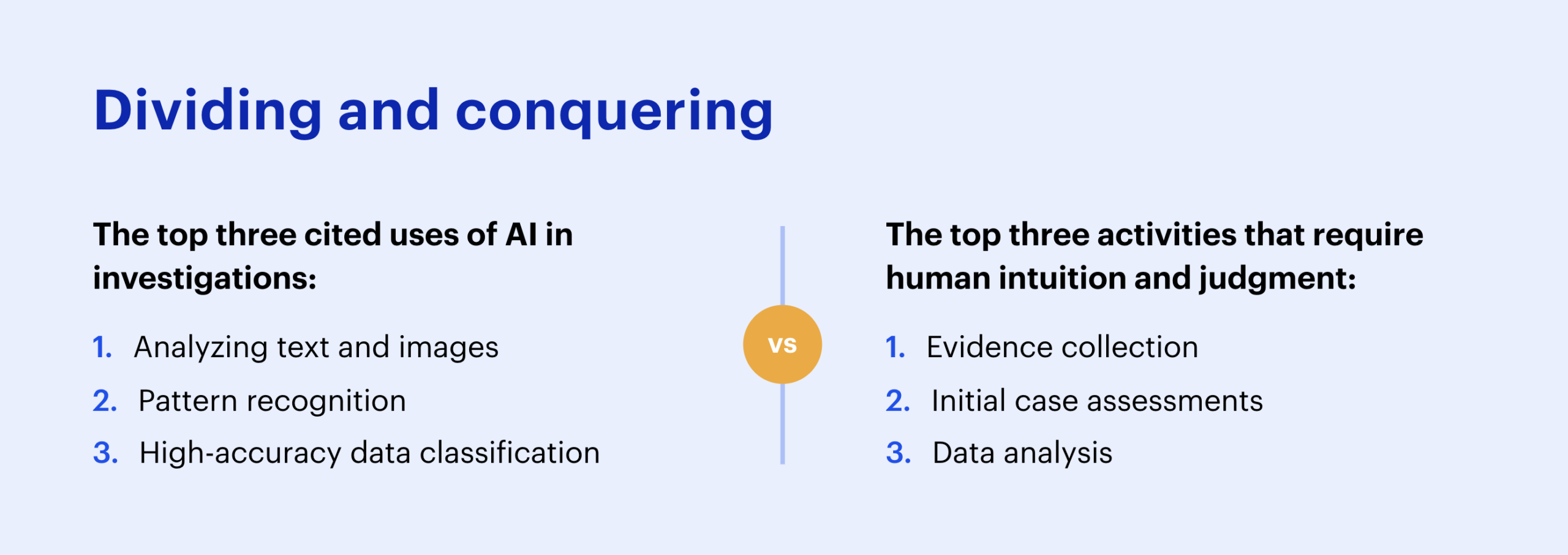
This tracks with Magnet’s own research: AI adoption in enterprise DFIR has jumped to 68%. When it comes to how its used, AI is trusted to comb through data and surface leads, while human judgment still makes the call on what those findings mean.
How do you build forensic readiness before a cyber incident happens?
Doug’s starting point was logging: if you’re in a Windows environment with System Monitor (Sysmon) available and it isn’t turned on, turn it on. Beyond that, he recommended baselining systems so there’s a “normal” to diff against once something changes.
Tim pointed to tabletop exercises, running a mock ransomware or BEC scenario on a regular cadence, whether built in-house or run by an outside firm, as one of the most effective ways to build muscle memory before a real incident. Jeff agreed: tabletops reliably surface gaps, like outbound connectivity that should have been whitelisted in advance but wasn’t.
Readiness exercises are most valuable when they extend past the SOC and IR team to include legal and business leadership, since those groups ultimately decide whether to pay a ransom or how to communicate with customers, decisions that shouldn’t be made for the first time in the middle of a live incident.
What’s the most overlooked digital forensic artifact in an investigation?
All three experts converged on identity as the theme, even though they framed it differently.
Jeff argued that as more environments move to cloud and remote work, investigations need to start from identity rather than device: what did this identity access, and where, across the environment. He pointed to sign-in logs, browser sync telemetry, and Microsoft 365, OneDrive, SharePoint logs as key sources.
Doug added OAuth authentication sessions specifically. Resetting a compromised user’s password doesn’t revoke an associated OAuth token, which can leave an attacker with continued access even after the “obvious” fix is in place.
Tim raised persistence: even within M365, an attacker can grant an application persistent access to a user account that survives a session kill. Checking for persistence mechanisms across cloud and on-prem systems matters as much as checking identity itself.
The bottom line
The panel’s answers kept pointing back to the same idea: speed in incident response comes from preparation, not improvisation.
Targeted collection, documented playbooks, tabletop exercises, and a clear line on where AI helps and where a human must make the call are what let a team move fast without losing the rigor a case needs to hold up later with legal, insurance, or regulators.
Magnet Nexus and Magnet Axiom Cyber are built around that workflow: using EDR/XDR telemetry to drive targeted, remote collection at scale, then supporting the deeper forensic analysis once the systems that matter are identified.
Learn more
Watch the full Ask Me Anything, or read Closing the investigative gap in incident response.
FAQs about incident response and digital forensics
Triage is a fast, targeted collection focused on the artifacts tied to a specific alert. A full collection or acquisition comes second, once the systems that matter most have been identified.
Generally, no. What typically signals to an attacker that they’ve been discovered is losing access, not the presence of a collection agent.
Mature programs have documented, standardized playbooks, a shared knowledge repository, and automation connecting alerting tools to case creation. Early-stage programs improvise and rely on institutional knowledge held by a small number of people.
Turn on available logging, establish system baselines, and run regular tabletop exercises that include legal and business leadership, not just the SOC and IR team.