
From alert to root cause: Strengthening federal cyber investigations
Key Insights
- The race to remediation can leave doors open. Rushing to restore systems without a thorough investigation risks missing backdoors and getting hit again.
- EDR alerts alone aren’t enough. A deep forensic dive surfaces artifacts and evidence that monitoring tools simply won’t show you.
- Threat intelligence tools like MITRE ATT&CK, YARA, and Sigma close the loop between investigations and future prevention.
Federal agencies are frequent targets of sophisticated cyber attacks. And as Jeff Rutherford (FBI, ret.) and Steve Gemperle (U.S. Secret Service, ret.) made clear in a recent webinar, the volume of attacks is only going up. But the challenge isn’t just the number of incidents. It’s what happens after one is discovered.
When a cyber incident hits your organization, the pressure is immediate: get the attacker off the network, restore operations, and move on. But that race to remediation is exactly where things get overlooked.
The overlooked part of the incident response lifecycle
Most practitioners familiar with incident response know the lifecycle: Preparation → Detection & Analysis → Containment, Eradication & Recovery → Post-Incident Activity. As Jeff put it, the pressure is almost always on getting to containment, eradication, and recovery as fast as possible.
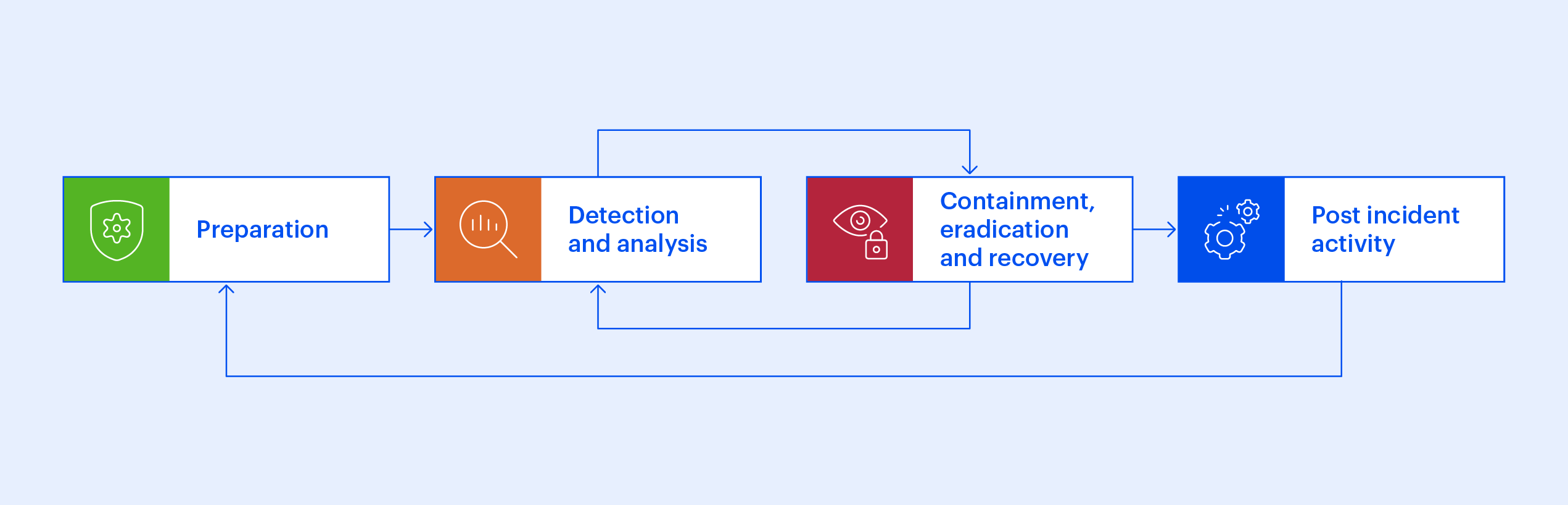
But those arrows at either end of the lifecycle matter just as much. And as Steve noted, digital forensics isn’t only a post-incident activity. Analysis of affected devices fits into containment and eradication too, helping scope the incident and remove what you find, not just what surfaced in alerts.
After the incident, a deep forensic dive does its other job: understanding how attackers got in, how they moved, and what they left behind. That intelligence feeds directly back into preparation. That’s the part of the loop that prevents recurrence.
There’s another piece that gets underestimated: many federal organizations rely heavily on EDR alerts and monitoring tools. Those are valuable, but they offer a narrow view. Performing a digital forensics deep dive surfaces artifacts and evidence that those tools simply won’t show you.
Why the investigative deep dive can’t be skipped
Steve put it plainly, drawing on direct field experience:

 From a hacker’s perspective, they want to gain persistence into your system. So you may find one back door, but you need to look for those additional back doors that they may have installed that allow them to have that persistence. And they’re very good at hiding those. One hacker we arrested said he would put three to four backdoors in every system that he attacked.”
Steve Gemperle
Manager, Forensic Consultants, Magnet Forensics
Jeff reinforced the point: if you haven’t gained a complete scope of what happened, persistence mechanisms can be left behind and missed, especially if you’re only looking at a narrow view of the environment. This is where the deep dive has value. According to Jeff, it’s the step that gets skipped when teams are in such a race to remediate.
The question Jeff posed is worth sitting with: “How do you prevent that attack from working again if you haven’t fully identified all of those facets?”
Threat intelligence: closing the loop
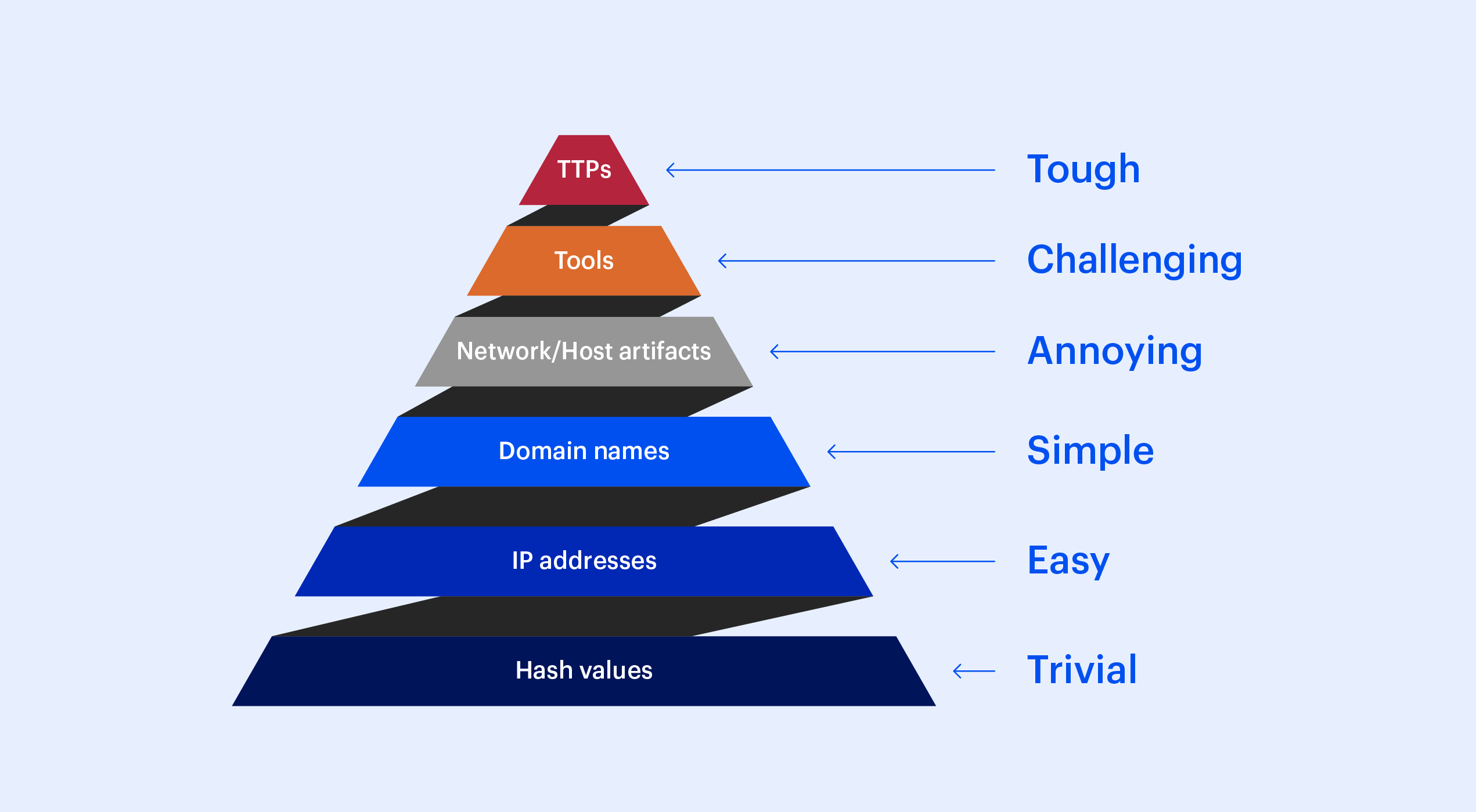
The investigation itself generates the intelligence: the question is whether you feed it back into your defenses. The underlying logic starts with the Pyramid of Pain, a conceptual model that ranks indicators of compromise (IOCs) based on how much disruption they cause attackers when defenders use them. Higher-level indicators inflict greater operational pain on attackers, but are also more challenging to detect and act upon.
Three practical tools for moving up that pyramid:
- Hash matching — Known-bad file hashes can be run across endpoints to flag malicious files quickly. Known-good lists are equally useful for filtering out legitimate files and focusing attention on what actually matters.
- YARA rules — Open-source pattern-matching rules that identify malware families based on binary or textual signatures, surfacing matches directly inside forensic tools without requiring manual file-by-file review.
- Sigma rules — “Sigma is for logs what YARA is for files.” A vendor-agnostic framework for detecting attacker behavior inside log files. As both Jeff and Steve noted, manually combing through Windows event logs can be a massive undertaking. Sigma scans cut through the noise automatically.
All of this maps to the MITRE ATT&CK framework, which organizes attacker behavior across tactics, techniques, sub-techniques, and procedures. When an investigation surfaces a specific technique — say, PowerShell being used to execute payloads — MITRE points to concrete mitigations like restricting PowerShell access to developers and administrators only. As Jeff put it, you can take what has been collected and processed through digital forensics and funnel it directly back into root cause analysis: understanding not just what happened, but what needs to change to prevent it from happening again.
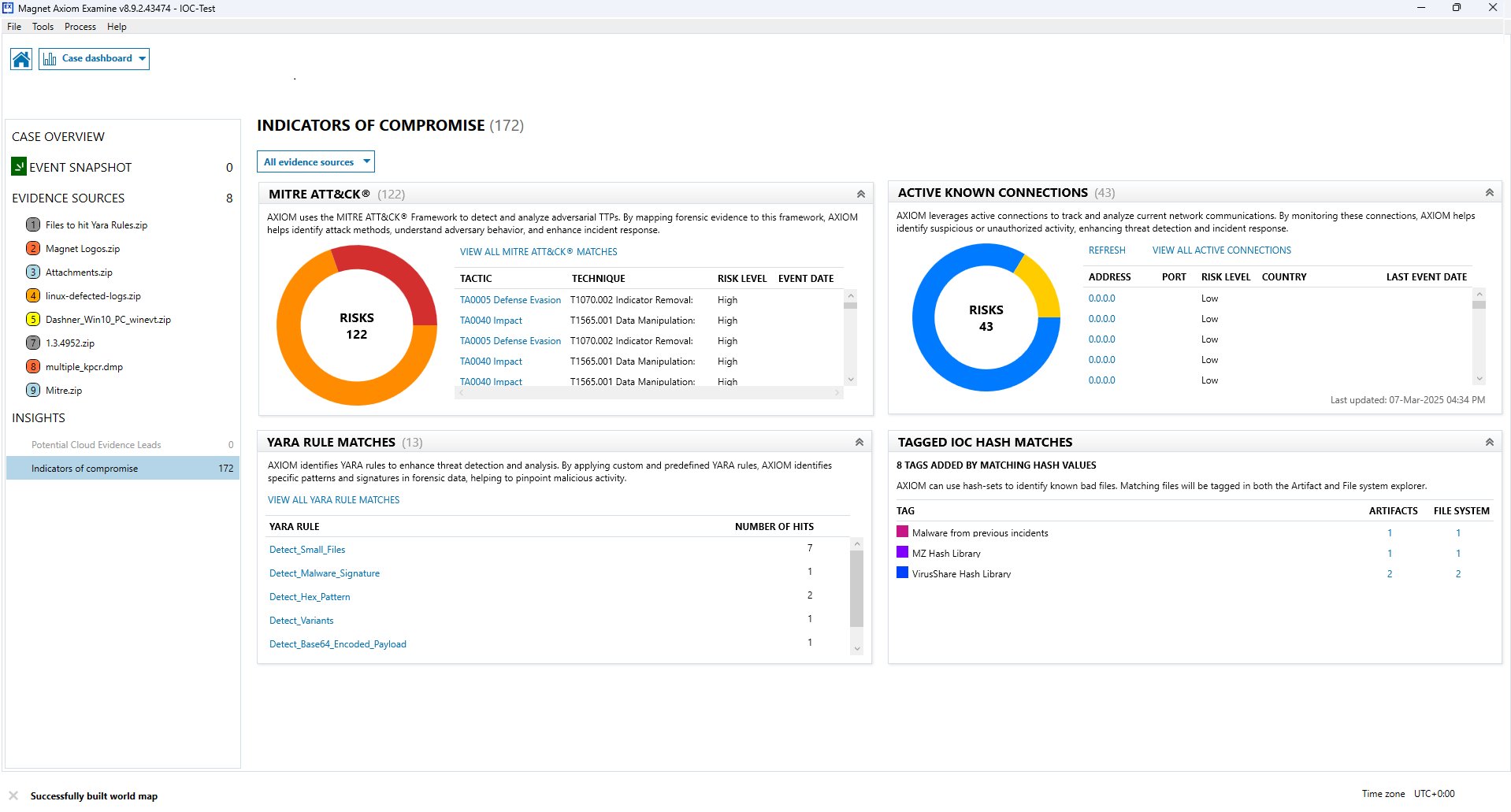
These tools come together in the IOC Insights dashboard inside Magnet Axiom Cyber — a unified view of critical threat intelligence that makes it an efficient starting point for any incident response investigation. Investigators can immediately identify suspicious activity, visually gauge risk levels, and move into deep dive analysis, all from a single dashboard with just a couple of clicks.
Reporting is a key part of the investigation
Once the deep dive is done, the findings need to reach the people who’ll act on them.
Whether the audience is a U.S. attorney unfamiliar with network breaches, a supervisor, or agency leadership, raw data alone won’t get them there. As Steve put it: “People can understand visuals a lot more than they can just raw data.”
Timelines, connection graphs, and visual summaries of threat severity make findings accessible to the people who need to act on them. The IOC dashboard is built to do exactly that.
Reporting isn’t an afterthought. It’s part of the investigation, and ultimately part of making sure the same incident doesn’t happen again.
Learn more about how Magnet Axiom Cyber supports federal cyber investigations. Watch the webinar, Responding to a Cyber Incident as a Federal Employee, or explore our federal incident response solutions.