
Evidence sharing is the next inflection point for enterprise DFIR teams
Key Insights
- Most enterprise DFIR teams still share evidence the way desktop tools allowed —USBs, encrypted file transfers, screen shares, handoffs — not the way modern investigations demand.
- Forensic evidence sharing is at the same inflection point that reshaped office work when concurrent collaboration arrived.
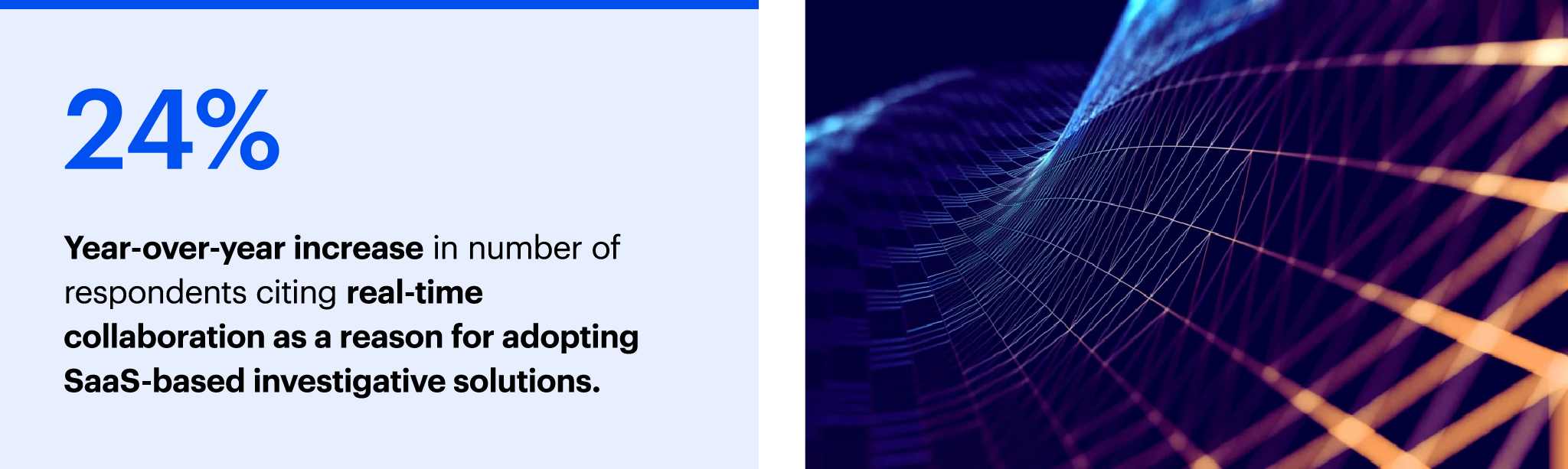
- The data backs this up: real-time collaboration is the fastest-growing reason enterprise teams are adopting SaaS-based DFIR solutions, up 24% year-over-year.
Think back to what collaborating on a PowerPoint used to look like. You emailed the deck around, everyone marked up their own copy, and someone got stuck merging the versions. If a group needed to work on it together, they got in a room. That was what real-time collaboration meant.
Then Microsoft 365 and Google Workspace showed up, and within a few years the way teams work fundamentally changed. Now, people don’t schedule meetings just to look at a slide together. The tools caught up with how people wanted to work.
At Magnet Forensics, we see enterprise digital forensics and incident response (DFIR) teams — along with the forensic service providers handling investigations on behalf of their clients — at that same inflection point now. The way evidence gets shared with stakeholders is the next workflow to evolve.
A model for evidence sharing defined by desktop tools
A modern enterprise investigation rarely involves only the DFIR team. A phishing-led business email compromise case pulls in IT, security operations, legal, finance, and in some cases outside counsel. An IP theft case touches HR, legal, and a business unit leader. Each stakeholder needs access to the data and getting it to them is where investigations slow down.
For most enterprise DFIR teams, evidence sharing today still looks like:
- Loading encrypted USBs or uploading to secure file transfer services for outside counsel
- Scheduling screen-share sessions to walk HR or business stakeholders through findings
- Handoffs where the examiner loses visibility once evidence leaves their hands
This is how the work has always gotten done, because it’s what the available tools supported. But it comes with real costs:
- Lost time on every handoff
- Security risks and data silos created by moving evidence through disconnected channels
- Chain of custody challenges that weaken defensibility
- Examiners who can’t see how their evidence is used after it leaves their hands
The rise of real-time collaboration in digital forensic workflows
Data from the 2026 State of Enterprise DFIR Report, drawing on insights from more than 350 enterprise DFIR professionals, backs this up.
Efficiency, flexibility, and scalability remain the most-cited reasons for adopting SaaS-based investigative solutions. But the story underneath those numbers is real-time collaboration — which posted the largest year-over-year increase of any adoption driver. These benefits aren’t separate — a lot of what teams describe as efficiency gains comes directly from being able to work together on the same case at the same time.
Eighty percent of respondents say SaaS helps them scale in the face of unpredictable investigation volumes, while 79% say meeting data residency and security requirements is essential. Both expectations need to be met.
Taken together, the data lands on a clear point: for enterprise DFIR teams, collaboration has become a prerequisite for keeping pace with investigation volumes, timelines, and stakeholder expectations.
What modern DFIR evidence sharing looks like in practice
Consider a scenario enterprise teams encounter regularly: a senior salesperson resigns to join a direct competitor. Before their departure, an alert flags unusual activity — large volumes of customer records pulled to a personal cloud account, sensitive pricing documents emailed externally. The DFIR or insider threat team is asked to investigate.
After remotely collecting and processing data from the employee’s endpoint, the DFIR team has the evidence. But the case doesn’t move forward on that alone. Legal must assess potential exposure, identify privileged content, and determine relevance. HR needs to validate policy violations. Business stakeholders require context on customer relationships and outside counsel may be engaged to advise on litigation or trade secret risk. E xecutives ultimately weigh the reputational risk and the cost-benefit of pursuing legal action. In a desktop-era model, the examiner exports evidence, distributes files to each stakeholder, schedules walkthroughs, and waits for follow-ups.
In the model that’s emerging — the one Magnet Review is built for — those same stakeholders get scoped, role-based access to a shared, secure investigative view:
- The legal team reviews the same collected evidence to determine whether there is litigation, regulatory, or contractual exposure, while HR works in parallel to mark policy violations.
- Outside counsel is brought in with controlled access to the relevant subset of evidence — without USBs changing hands.
- The examiner retains visibility from collection through to review, working inside a governed environment where access is controlled and user activity is logged — without risky evidence handoffs.
- Role-based access controls (RBAC) and a full audit trail show exactly who saw what, and when — strengthening defensibility rather than diluting it.
- Decisions that took weeks can be reached in hours, with user activities logged and defensible.
A practical path to modernizing DFIR evidence sharing
For many enterprise teams, the practical way to get there is to start hybrid — collaborating in the cloud on the cases where it matters most, while keeping other work on-prem where data sensitivity or regional requirements call for it.
Magnet Forensics approach is built for that path. A single lightweight hybrid agent works across cloud and on-prem deployments, so teams can start enabling real-time collaboration for the cases that benefit first, and expand from there.
The gap isn’t in how investigations are conducted — it’s in how evidence moves between the people involved. Teams that close that gap don’t just work faster; they make decisions sooner, with better visibility and defensibility. That’s what separates teams keeping pace from those still constrained by desktop-era workflows.
Read the full 2026 State of Enterprise DFIR report
See how 350+ DFIR practitioners are rethinking collaboration, AI, mobile evidence, and the toolkits that support modern investigations.