

Route View: Not just dots on a map anymore
By Chad Gish
Key insights
- Route View transforms geolocation artifacts into a dynamic, interactive timeline so investigators can play back a suspect’s movements at speeds from 1x to 200x.
- Available in both Magnet Axiom and Axiom Portable Cases, Route View puts geolocation analysis directly in the hands of examiners, investigators, and prosecutors.
- From annotated maps to exportable video, Route View turns raw movement data into evidence that strengthens timelines, supports charging decisions, and helps make the case to juries and judges.
In a recent case, a violent crime spree tore through a large metropolitan U.S. city, leaving many victims injured and an entire community shaken. The suspects began their rampage with a carjacking, then drove across the city committing armed robberies, targeting innocent people as they left hospitals, exited shopping centers, or walked through parking garages on their way home to their families. Over an 18-hour period, the suspects left a trail of chaos and fear in their wake.
Law enforcement acted swiftly. After identifying and apprehending the suspects, investigators secured legal authorization to extract data from their mobile devices.
Using Magnet Graykey for the extractions and processing the data with Magnet Axiom, the team began uncovering crucial digital evidence shortly after the arrests. Among that evidence, geolocation data would prove pivotal — and that’s where Route View came in.
Turning movement into evidence with Route View
One of the tools in Magnet Axiom that helped bring this case together was the ability to create animated routes using Route View. Route View transforms geolocation artifacts, such as Apple’s cached locations, into a dynamic, map-based timeline that investigators can interact with and analyze visually.
It doesn’t just show where someone has been — it helps tell the story of where they went, when they were there, and what happened along the way.
Route View allows investigators to “play back” a suspect’s movements across time. With built-in playback at 1x, 10x, 25x, 50x, 100x, and 200x speeds, investigators can watch the route unfold like a timeline animating across a map.
That capability proved especially useful in this case, where understanding movement patterns, stops, and timing was critical to connecting the suspects to multiple crime scenes.
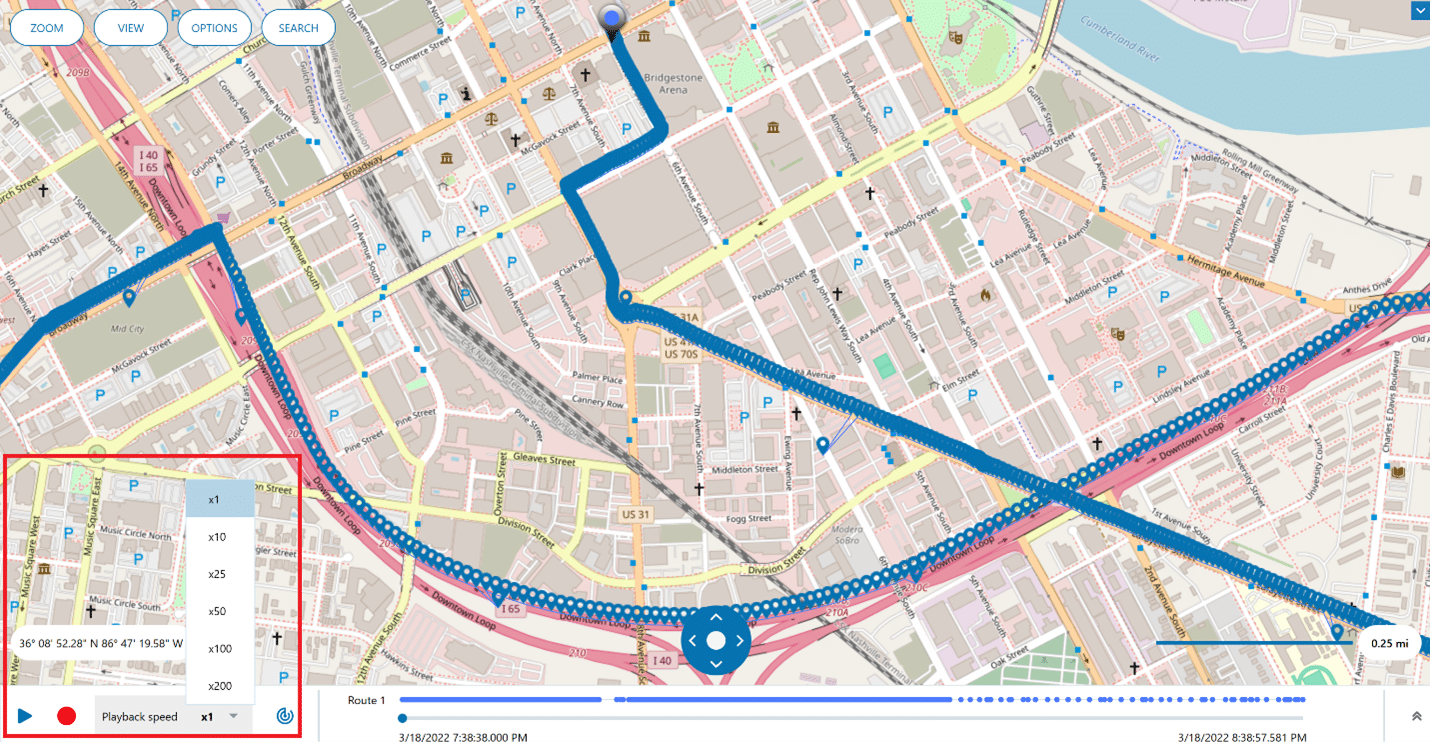
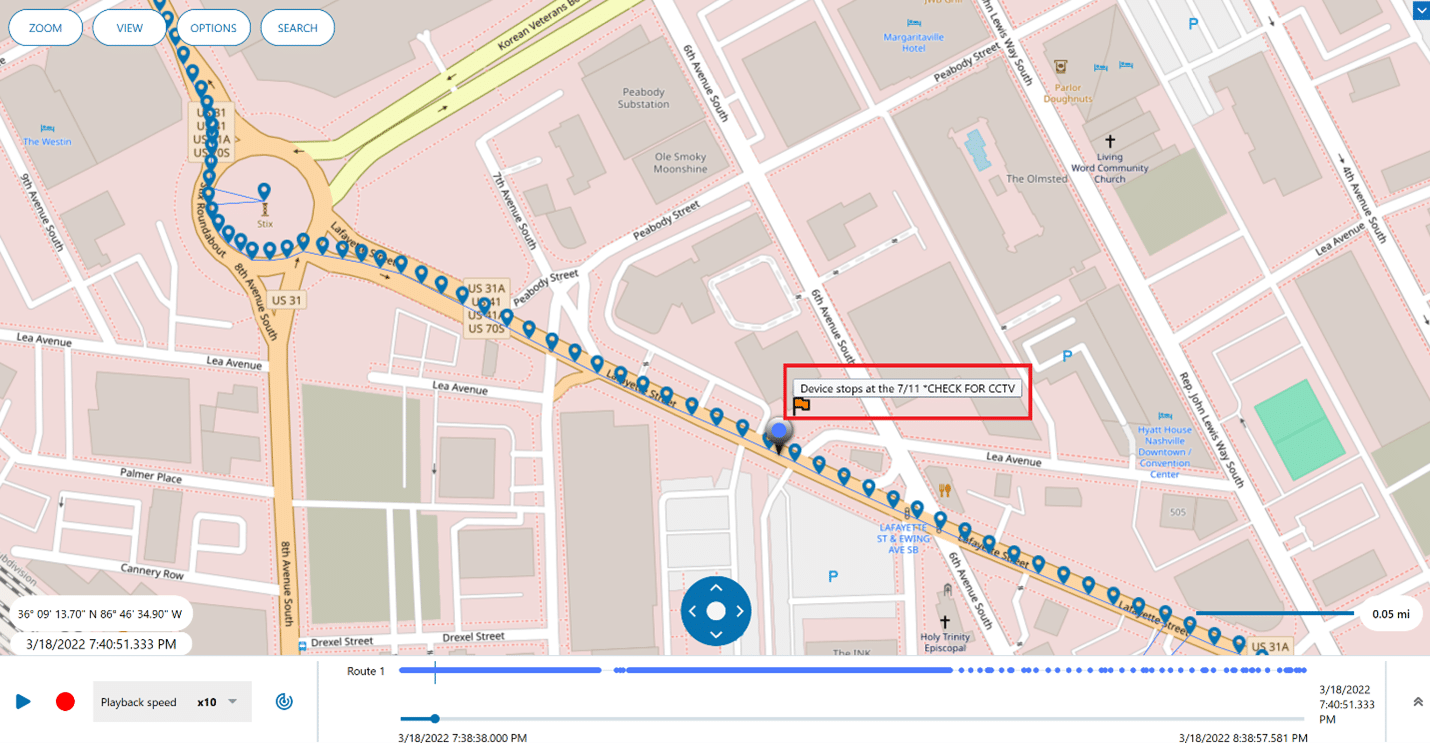
Beyond viewing the path of movement, Route View lets users add comments and annotations directly on the timeline. Investigators can flag key events with context-specific notes such as:
- “Victim #3 parking garage — 21:43hrs”
- “Surveillance camera nearby — footage requested.”
These annotations turn the map from a visualization into a collaborative investigative tool, ready to be shared across teams.
Importantly, Route View isn’t limited to Magnet Axiom. It’s also available inside Magnet Axiom Portable Cases, meaning examiners, investigators, and prosecutors can access the same interactive route analysis from their own systems, without needing to open Axiom. Investigative teams can put geolocation insights to work immediately by:
- Comparing routes to witness statements
- Planning interview strategies
- Identifying new leads from suspect movement
In this case, Route View helped identify key patterns:
- A pause near each crime scene
- Routes that avoided main roads
- Repeat visits to specific neighborhoods, which turned out to be homes of co-defendants
These observations strengthened the timeline, supported charging decisions, helped identify additional suspects, and gave investigators a clear narrative to build the case around.
From the device to the courtroom
What Route View shows on screen proved invaluable not just during the investigative phase, but also in preparing the case for prosecution. In this case, it allowed examiners to show, not just tell, how the suspects moved through the city — connecting device data directly to the physical crime scenes and victim accounts.
Route View also records routes as video, so investigators can export and share movement timelines as part of case files, presentations, or courtroom exhibits. By displaying trackpoints in a dynamic, visual format, Route View helps investigators, legal professionals, judges, and jurors better understand the sequence and flow of events. Visual movement makes the sequence of events legible in ways static data tables can’t.
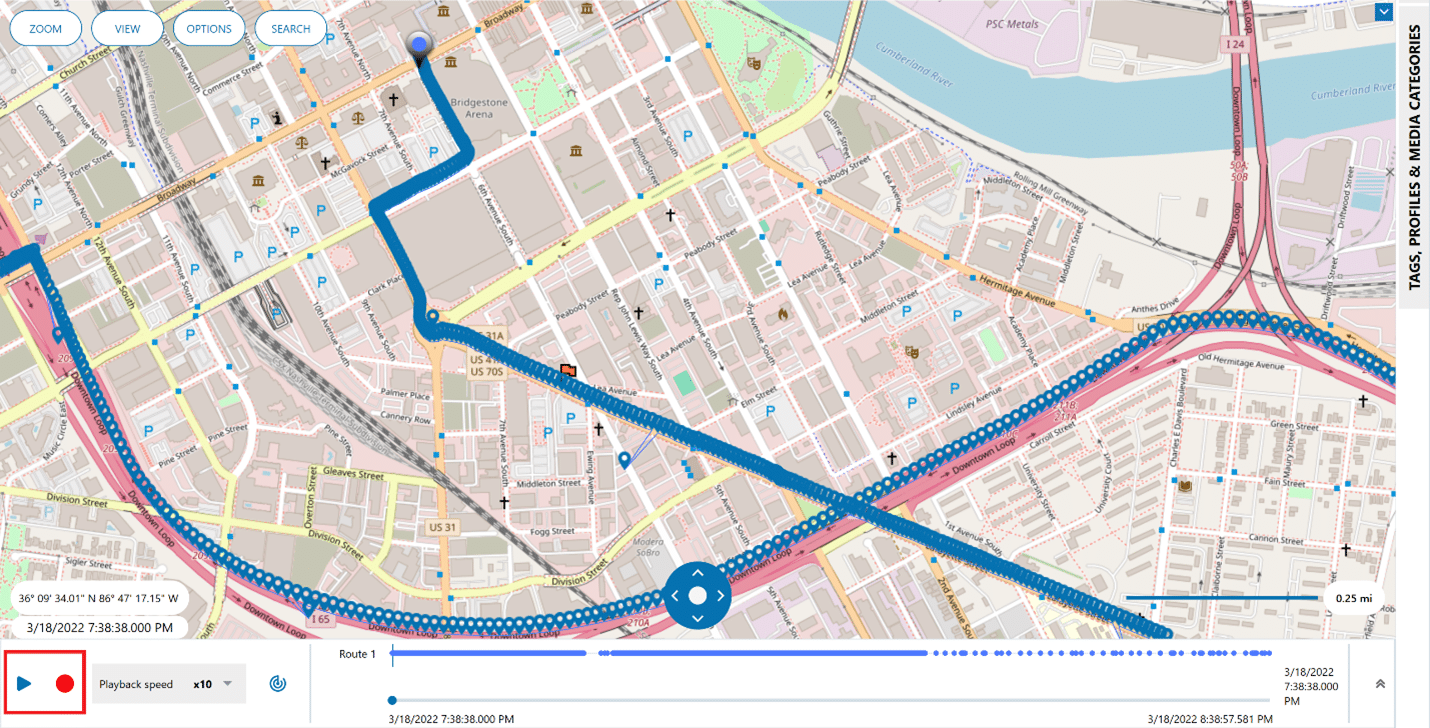
In the courtroom, Route View helps make digital evidence tangible and understandable, providing context that raw data alone might not reveal. It bridges the gap between complex forensic data and real-world impact, giving juries and judges a visual timeline that supports other physical and testimonial evidence. Route View doesn’t just show where a device has been — it helps illustrate motive, intent, and opportunity.
Route View as a force multiplier
This case is a prime example of how digital forensics, when paired with the right tools, can act as a force multiplier for investigative teams.
Magnet Axiom’s Route View turned raw device data into a vivid timeline of events, helping establish location, movement, and connections across a wide-ranging crime spree.
And because Route View is also available in Portable Cases, investigators don’t have to wait to bring findings back to the lab. They can put geolocation evidence to work immediately, wherever they are, and move cases forward faster and with more confidence.
It’s not just dots on a map anymore. It’s the movement, the motive, and the missing piece that turns data into justice.
Chad Gish, Forensic Consultant at Magnet Forensics, is a former police detective with 26 years of service at the Metro Nashville Police Department. Chad is a recognized expert in digital forensics, playing a key role in high-profile cases and the development of forensic labs and crime centers.