Meet the recipients of the 2026 Magnet Forensics Scholarship Award
We’re proud to announce this year’s recipients of the Magnet Forensics Scholarship Award — an inspiring group of officers working toward, or advancing, careers in digital forensics.
The Magnet Forensics Scholarship Award was created to help law enforcement agencies address the growing talent shortage in digital forensics, while also promoting greater diversity in the field. By helping to offset financial barriers, the program supports agencies facing tight budgets as they work to investigate serious crimes such as child sexual exploitation, human trafficking, and cybercrime.
Once again, it’s an honor to award these scholarships in memory of Peel Regional Police Sgt. Steve Martin. As an Internet Child Exploitation Unit investigator, Sgt. Martin played a key role in bringing offenders who preyed on children to justice. He passed away in January 2021 after a battle with cancer, and his dedication and legacy continue to inspire this program.
This year’s recipients represent a wide range of backgrounds and experience — from professionals new to the field to seasoned investigators seeking to expand their expertise. Recipients were selected from across the globe based on their dedication to public safety, passion for digital investigations, and commitment to professional growth.
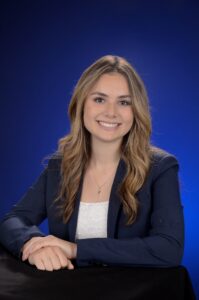
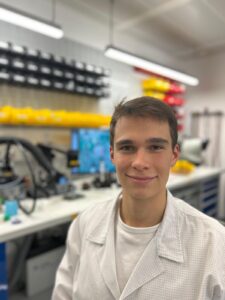
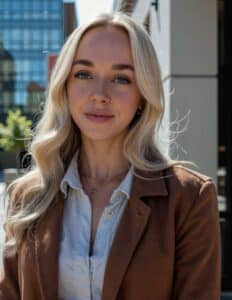
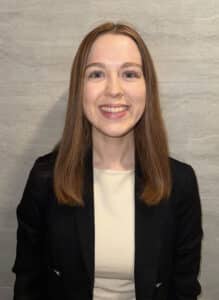
The winners of the 2026 Magnet Forensics Scholarship Award are:
New to digital forensics:
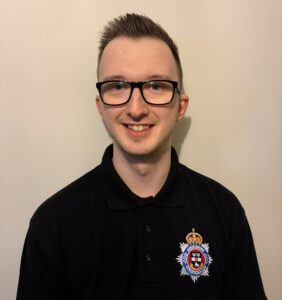

Advanced in digital forensics:
Recipients of the scholarship will receive:
- World-class digital forensics training: Starting from the very basics of digital forensics and working right through to advanced smartphone and computer forensics, winners will be able to take unlimited training from Magnet Forensics for a year.
- The opportunity to obtain digital forensics certifications: After completing training, they’ll be eligible to become Magnet Certified, demonstrating expertise and providing credibility within their agency and on the stand.
- Software license for one year: Winners will also receive a one-year Magnet Axiom license, giving them access to a comprehensive digital forensics tool that will help them access and analyze evidence from smartphones, computers, and the cloud.
We asked the winners to share more about their experiences in the field, their hopes for the Magnet Forensics Scholarship Award, and more.
Tell us about your current role/department.
Emiline Stewart: I’m a Senior Digital Forensic Examiner (SDFE) on a Computer Analysis Response Team. In my current role, I’m responsible for the collection, preservation, and analysis of digital evidence, both in a laboratory setting and in the field.
Kate Armstrong: I’m a Senior Constable with Tasmania Police, currently working in the High-Risk Child Exploitation Unit. Our small unit includes four constables, one sergeant, a digital evidence expert and a senior intelligence analyst. We are a statewide unit covering Tasmania’s population of over half a million people. Due to limited resources, we conduct all our own digital triage and forensic analysis.
We investigate online child exploitation matters and identify offenders, with the goal of protecting vulnerable children and preventing further harm. As digital triage and analysis are a significant part of work, digital evidence is a constant and critical element of day-to-day investigations.
Valentin Hirsch: I currently work in Austria’s criminal intelligence service Austria, supporting investigations through digital forensics. My day-to-day work focuses on extracting data from damaged or challenging electronic devices – such as mobile phones, hard drives, and navigation units. After extraction, I prepare and structure the data and assist with analysis so investigators can quickly find the information that matters for their case.
Peyton Marrone: I am a Data Analyst in the Digital Evidence Unit at the Denver District Attorney’s Office. In my role, I analyze digital evidence, including mobile devices, computers, external drives, and warrant returns, to support criminal investigations during the eDiscovery process.
Lewis Richardson: I have been working as a Digital Forensics Practitioner since December 2023 for the Derbyshire Constabulary Digital Forensics Unit. My role is everything to do with mobile devices starting with the preservation to extraction and analysis of evidence from a broad range of different cases from Child Sexual Exploitation, Murder Investigations, Traffic Investigations and many more!
Alice Bull: I currently work within the West Midlands Police Digital Quality and Research Team within the Digital Forensics Unit. The team I work in is responsible for forensic software, hardware, and method validation activities. I also develop work instructions, standard operating procedures, research, and test new and exciting methods of data recovery and analysis.
What made you want to get into the field?
Emiline Stewart: I’ve been fascinated by computers and emerging technology from a young age. My grandfather guided me to join an elementary school Robotics team, and from there I continued learning by attending coding camps and, as I grew older, participating in red team/blue team competitions. My dream job was to work in a technological field that would allow me to help people. I feel incredibly lucky to have obtained that dream in my work as a digital forensic examiner for a law enforcement agency.
Kate Armstrong: The short answer is: the work demands it. In online child exploitation investigations, the truth is almost always contained in digital evidence, through messages, images, cloud accounts, app data, and the timelines and artefacts left behind on devices. The faster and more accurately we can locate and interpret that information, the sooner we can safeguard children and move matters through the court process.
I’m also drawn to the discipline of digital forensics itself. It’s detailed, methodical, and evidence-led, and that combination really suits how I work as an investigator. For me, it’s about uncovering the truth in a defensible way, and using it to protect the innocent and hold offenders to account.
Valentin Hirsch: My motivation became personal when my grandmother was targeted by a fraud scheme. I realized how valuable technical skills could be in understanding what happened and helping prevent similar harm to others. Since then, I’ve followed a path through a higher technical college and continued building my knowledge with a clear goal: to analyze data and use technology to help identify criminals and protect people from becoming victims.
Peyton Marrone: During my junior year at Notre Dame, I added a Computing and Digital Technologies minor, a stark contrast to my Political Science major. The classes quickly became my favorite and led me to the Cyber Crimes Unit internship. This field allows me to be a lifelong student!
Lewis Richardson: Not long after I joined Derbyshire Constabulary, there was a recruitment drive, which made me first aware of the world of digital forensics and all it had to offer. I was passionate about wanting to find the root cause of a problem and understand what occurred. Digital forensics allows me to pursue that passion on a daily basis by being able to delve into different data sets and every case brings new challenges to overcome.
Alice Bull: I have a degree in traditional forensics and had never considered digital forensics before. I saw a job advertised within the DFU and reached out to the hiring manager to discuss the post. After that conversation, and a tour around the facilities, I knew it was somewhere I would love to be.
What are you looking forward to learning in the program?
Emiline Stewart: I’m especially excited for the macOS Examinations, Advanced Mobile Forensics, and Advanced Mobile Analysis courses. I’m hoping to expand my knowledge in these areas, as well as the other offered courses, so I can take a deeper dive into artifacts and applications found on the various devices I analyze.
Kate Armstrong: I’m most looking forward to developing a structured, end-to-end approach, from acquisition considerations through to analysis and reporting, so that my work is not just “getting results,” but getting them in a way that is repeatable, defensible, and clearly articulated. Timely, well-executed digital evidence work can be critical in preventing further harm and ensuring key evidence isn’t missed.
I’m also excited to build stronger capability across the areas that matter most to our investigations: smartphones, computers, and cloud sources, and to become genuinely proficient with Magnet Axiom. Having access to world-class training for a full year is a huge opportunity to learn properly and build confidence through repetition and practice.
Valentin Hirsch: I’m looking forward to learning how to go deeper in my examinations – how to find the small but critical details that are easy to miss and that others might not discover. I want to expand my knowledge of artifacts and investigative techniques so I can approach each case with more confidence and a sharper eye for hidden or less obvious evidence.
Peyton Marrone: I’m most excited for the cloud and computer training because those are areas where I don’t yet have as much hands-on experience. I’m sure there are efficient techniques and best practices that I haven’t been exposed to yet, and I’m eager to learn them. One of my favorite quotes is that “I don’t know what I don’t know,” and this program feels like the perfect opportunity to learn from the best in the industry.
Lewis Richardson: I’m excited to learn how both myself and the unit can best utilize Axiom especially through the Magnet Axiom Examinations (AX200) course and learn how to better use other Magnet Forensics products for mobile phone examinations to better our evidence and investigations.
I am particularly looking forward to being able to delve into databases and learn how to better understand and manually review these when the forensic tools fall short.
Alice Bull: I am looking forward to furthering my knowledge of mobile phone forensics. My focus for the last 18 months has primarily been on computers, so it will be useful for me to be able to enhance my knowledge in different areas. Overall, for me to test everything that my department uses, I need to know how all the tools work and the practical use of them on top of the theory. That will enable me to understand any limitations and make appropriate recommendations for risk management in every digital forensics examination for West Midlands Police.
Any other thoughts you would like to share?
Emiline Stewart: I feel very passionate about the work I do and sincerely appreciate this opportunity, which I would not have otherwise been afforded without the scholarship.
Kate Armstrong: I applied for this scholarship because I wanted to be more effective in a role where the stakes are incredibly high. Every improvement in how quickly and accurately we can locate and interpret digital evidence has a real-world impact, especially in child exploitation matters, where early action can prevent further harm.
I’m honored to have been selected as a recipient of the Magnet Forensics Scholarship and proud to represent Tasmania Police through this program. I’m committed to getting the most out of the training and bringing that knowledge straight back into operational practice, strengthening our in-house capability, improving turnaround times, and supporting better outcomes for victims and the community we serve.
Valentin Hirsch: I’m grateful for the opportunity to apply and for the work that goes into supporting new and developing professionals in digital forensics. I take this responsibility seriously — both in terms of technical quality and ethical handling of sensitive data.
Peyton Marrone: I’ve been lucky to have mentors who have shaped my journey in this field. Their guidance has helped me grow faster than I could have on my own. I’m excited to continue learning as a 2026 scholarship recipient. Thank you, Magnet Forensics. I am honored and grateful for this opportunity
Lewis Richardson: I’d like to express my appreciation and deep thanks to Magnet Forensics for this fantastic opportunity, I look forward to meeting all new people, learning new skills and the knowledge that this scholarship will bring!
Alice Bull: I am immensely grateful to be given the opportunity to participate in the Magnet Forensics Scholarship this year. I am also grateful that my management believes in me enough to recommend me to apply! I am particularly eager to further the unit’s ability to provide justice to victims, work in my own way to improve trust and confidence and embrace the challenges faced with achieving that goal.