


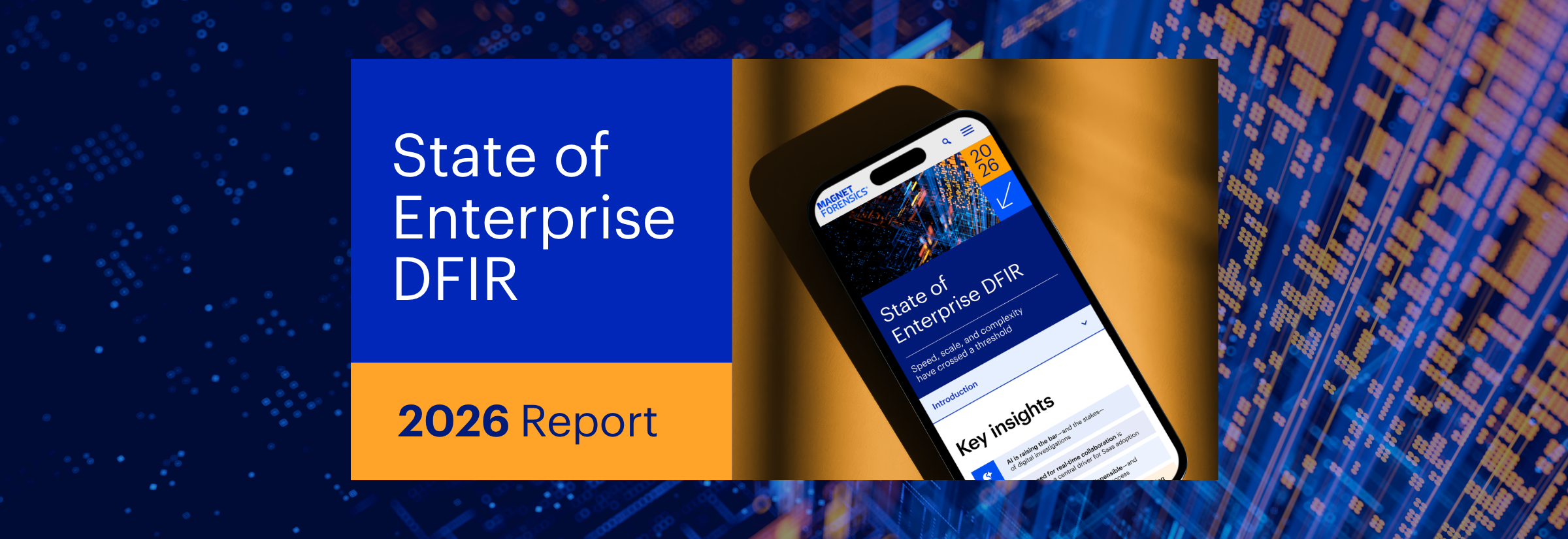
State of Enterprise DFIR Report: The top trends shaping digital investigations in 2026
This year’s State of Enterprise DFIR Report is here!
Based on a survey of over 360 private sector digital forensics and incident response (DFIR) professionals, the 2026 State of Enterprise DFIR report from Magnet Forensics offers insight into the latest challenges facing enterprise investigation teams and forensic service providers—and serves as a valuable planning tool for the year ahead.
From the rapid adoption of AI to the growing importance of mobile evidence, real‑time collaboration, and integrated toolkits, this year’s findings point to a clear shift in how enterprise digital investigations are conducted.
Below is an overview of the four defining insights shaping enterprise digital investigations in 2026, but head over to the report for a deeper exploration of the findings.
1. AI is raising the bar—and the stakes—of digital investigations
AI has become the dominant force reshaping digital forensics. 68% of respondents now use AI in their investigations, up dramatically from 20% in 2024. Investigators report that AI helps them process more data, recognize patterns faster, and classify evidence with higher accuracy. At the same time, malicious actors are leveraging AI to launch more sophisticated attacks.
2. The need for real-time collaboration is becoming a central driver for SaaS adoption
Digital investigations are now more cross-functional, complex, and distributed. Real-time collaboration showed a 24% year-over-year increase as a primary driver for adopting SaaS-based investigative tools. Eighty per cent of respondents agree that SaaS tools help them scale investigations up or down as needed, and 79% say meeting data residency and security requirements is essential. Collaboration across geographies, business units, and stakeholders is no longer a value add—it’s a foundational requirement.
3. Mobile evidence is indispensable—and increasingly difficult to access
Mobile devices remain one of the richest sources of digital evidence. Sixty-one per cent of respondents say they always or often rely on mobile collections, while 66% report that the number of devices per investigation is increasing.
However, limited mobile data extraction has been the top challenge for three consecutive years, with access becoming more restricted due to operating system security enhancements, encryption, privacy regulations, and MDM controls.
4. As toolkits expand, integration is becoming a defining factor in investigations
Investigators are adopting specialized tools to address new data sources, investigative techniques, and compliance requirements and that’s causing toolkits to continue to grow. The average number of tools used per case has increased from 5.5 to 7.1 in the past year.
This trend reflects broader investigative needs but also introduces significant workflow friction, including challenges managing multi‑tool environments, correlating outputs, and maintaining consistent reporting.
What’s next for enterprise digital investigations
The 2026 report reveals that the same technologies that strengthen investigations are also reshaping the risks they must confront. That means that investigative readiness is no longer just a technical concern—it is a leadership one.
The ability to respond effectively will depend on how organizations equip their investigation teams to operate at scale: aligning tools, workflows, governance, and talent in ways that support speed without sacrificing defensibility, transparency, or trust.
Read the 2026 State of Enterprise DFIR Report to explore the full findings, data, and expert analysis.
Additional resources
- Have you tried Magnet Axiom Cyber yet? Get your free trial now and see how Axiom Cyber supports a variety of investigation types and has unique capabilities for internal investigations, eDiscovery, and incident response.
- Learn more about how Magnet Verakey enables advanced consent-based mobile extractions to help you protect your business.
- Watch this episode of Cyber Unpacked where we unpacked some of the top challenges investigative teams face, from AI’s opportunities and risks to common pitfalls they’ve overcome.
- Join us for a panel discussion with some of the expert contributors from the report on March 18th to explore realities facing modern investigation teams and the strategic shifts underway across the private sector.