
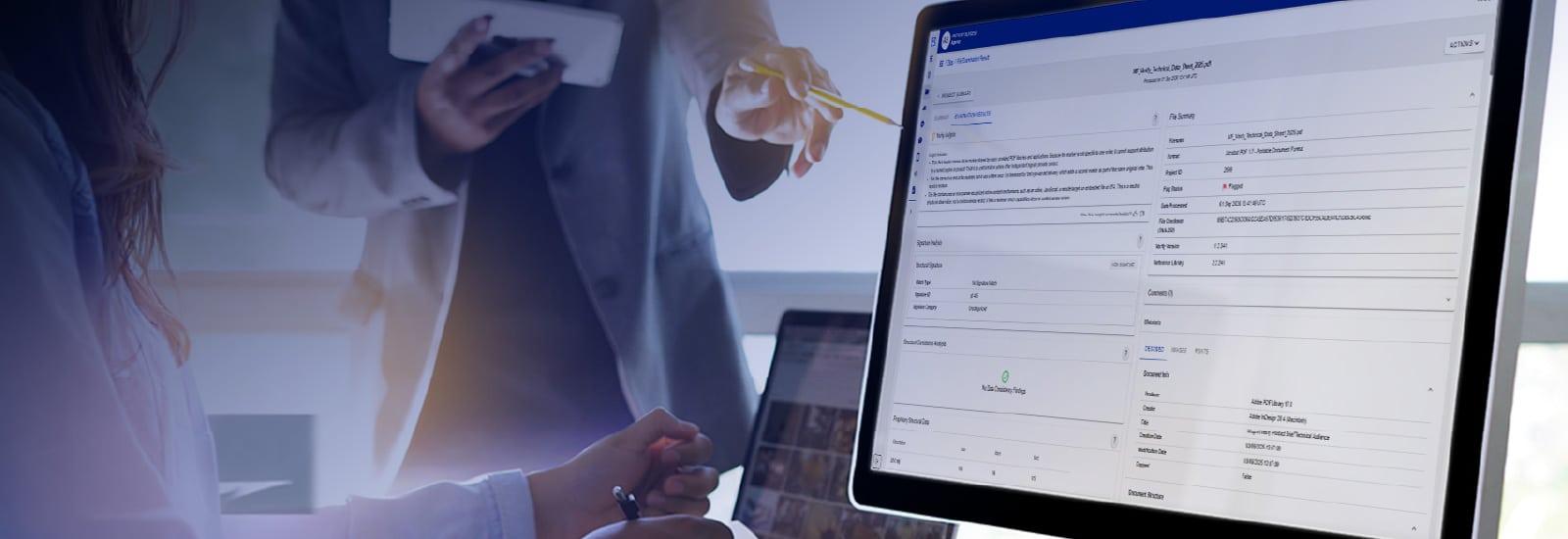
Introducing PDF Analysis in Magnet Verify: Authenticity and provenance for document evidence
What’s new:
- Examine what’s inside a PDF — objects, layers, and embedded elements, not just the metadata on the surface
- Surface provenance and authenticity signals in the File Examination Dashboard, so you can explain your findings, not just report them
- Analyze images, video, audio, and now PDF formats in one Magnet Verify workflow
Many digital investigators and forensic examiners are facing this situation: a PDF comes in as evidence. A bank statement, invoice, contract, or maybe a screenshot someone exported, and it looks fine. Clean layout, sensible dates, nothing visibly off. But “looks fine” isn’t a finding you can put in a report, and if that document ends up in a legal proceeding, there’s a good chance that opposing counsel is going to ask how you know it wasn’t altered.
Right now, answering that question is harder than it should be. You open a metadata viewer, maybe a second utility, maybe a third, and you piece together an opinion from whatever each one shows you. There’s no standard tooling or workflow, so your conclusion depends partly on which tools you happened to reach for. And when you’re asked to justify it, you’re explaining a process rather than pointing at evidence.
Today, Magnet Verify closes a longstanding gap in digital evidence workflows with the introduction of PDF Analysis. Now you can analyze structural, provenance, and authenticity signals within a document, helping assess whether a file appears consistent with its claimed history. It’s one of the most requested, underserved capabilities in digital forensics and marks an important step in Verify’s evolution from media authentication to broader file-based evidence analysis.
The role of PDF structural analysis: how do you determine whether a PDF is original?
A PDF can look perfectly legitimate on the surface while still containing signs of editing, modification, or reconstruction. That’s why assessing a document’s authenticity requires looking beyond appearance and metadata alone. Content, signatures, and creation dates can be changed; metadata can be removed, and documents can pass through multiple applications while leaving little visible evidence behind.
What PDF Analysis does
PDF Analysis examines how a document is actually built. Verify analyzes the internal structure of the PDF, including objects, layers, embedded elements, and structural changes, to surface signals that may indicate edits, inserted content, or inconsistencies within the file.
These signals help an examiner understand whether a document’s construction aligns with its claimed history or not. This approach also surfaces consistencies with known PDF encoder behavior to give users information about the provenance of the PDF that is currently impossible to attain in any other way.
Why PDF structural analysis matters
When a PDF becomes evidence, the question isn’t whether it looks genuine. It’s whether you can explain why you trust it. Metadata can provide clues, but structural analysis reveals how a document was created, modified, and assembled. Rather than delivering a simple “authentic” or “fake” signal, Verify surfaces the evidence examiners need to reach and defend their own conclusions.
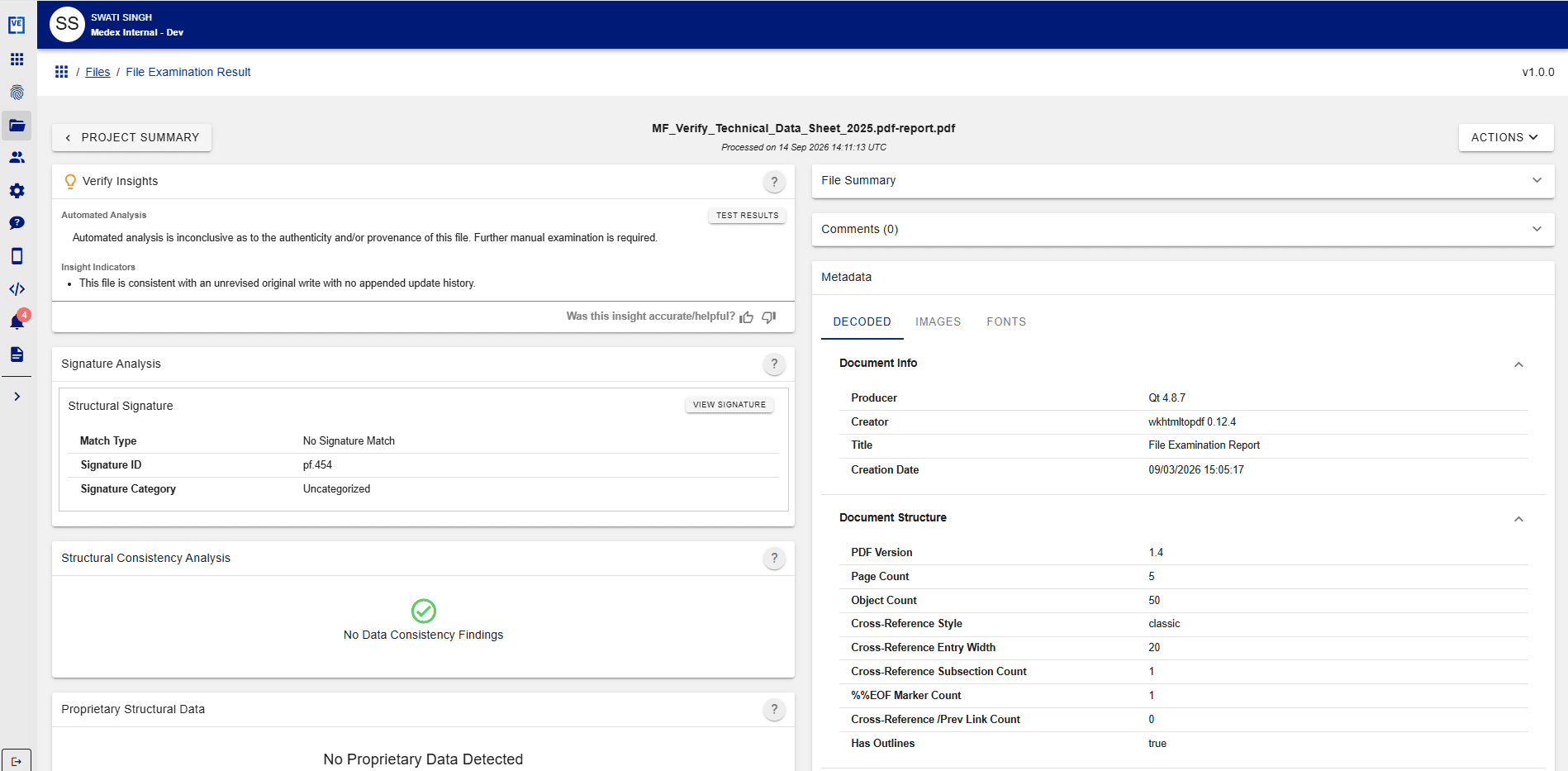
File Examination Dashboard: Authenticity signals you can defend
The hardest part of document analysis usually isn’t forming an opinion about authenticity or provenance. It’s articulating that it’s a reliable one. In many investigations, the real challenge is explaining how and why you reached that opinion. When a PDF becomes evidence, examiners need need findings they can understand, document, and explain.
What File Examination Dashboard does
The File Examination Dashboard brings together the provenance and authenticity signals identified within a PDF, helping investigators quickly assess what they are seeing. This includes metadata consistency checks, creation and modification patterns, and indicators that may reveal the tools, workflows, or processes involved in the document’s history.
Verify does not reduce a document to a simple “authentic” or “fake” label. PDFs, media, and files can be original, legitimately edited, exported between platforms, converted from other formats, or altered in ways that require human interpretation. Instead of providing a verdict, Verify surfaces the evidence and context needed to support an examiner’s assessment.
Why it matters
Whether you’re working on a criminal investigation, reviewing submitted documentation, or examining evidence for legal proceedings, transparency matters.
When you can clearly show what was observed and explain how those observations support your findings, your conclusions become more defensible and more likely to withstand scrutiny. That’s the difference between an assumption and an examination.
One workflow for the evidence you receive
Investigations don’t arrive neatly organized by file type. A single case might include photos from a mobile device, video from a surveillance camera, audio recordings, and PDF documents such as invoices, contracts, bank statements, or reports. Until now, documents have often required investigators to leave their existing workflow and rely on separate tools to continue their analysis.
With PDF Analysis built directly into Magnet Verify, examiners can now analyze PDFs alongside images, video, and audio within the same environment. Instead of switching between tools and piecing together findings from multiple sources, forensic examiners can review different evidence types through a consistent workflow and reporting experience.
The immediate benefit is simple: for the first time, PDFs can be analyzed alongside images, videos, and audio. That means less tool switching, faster examinations, and a more consistent workflow across evidence types. The result is a more streamlined and repeatable approach to evidence analysis, helping teams document and defend their findings with greater confidence.
From legal and financial matters to corporate and criminal investigations, examiners are frequently asked to assess the authenticity of digital documents. Magnet Verify helps examiners surface the structural and provenance signals needed to assess a PDF’s authenticity and support evidence-based findings through a more consistent and repeatable examination workflow.
Learn more about PDF Analysis in Magnet Verify, or watch Introduction to Magnet Verify to see how Verify helps examiners assess digital evidence authenticity, identify potential file manipulations and alterations, and trace file provenance.